Florida follows the self-help rule: you may trim branches and roots of a neighbor's tree back to your property line, at your own expense, without their permission. Three hard limits: you can't cross the line — not even to reach a better cutting angle, you can't injure or kill the tree, and you can't bill the neighbor for the work. The neighbor also has no legal duty to trim a healthy tree for you.
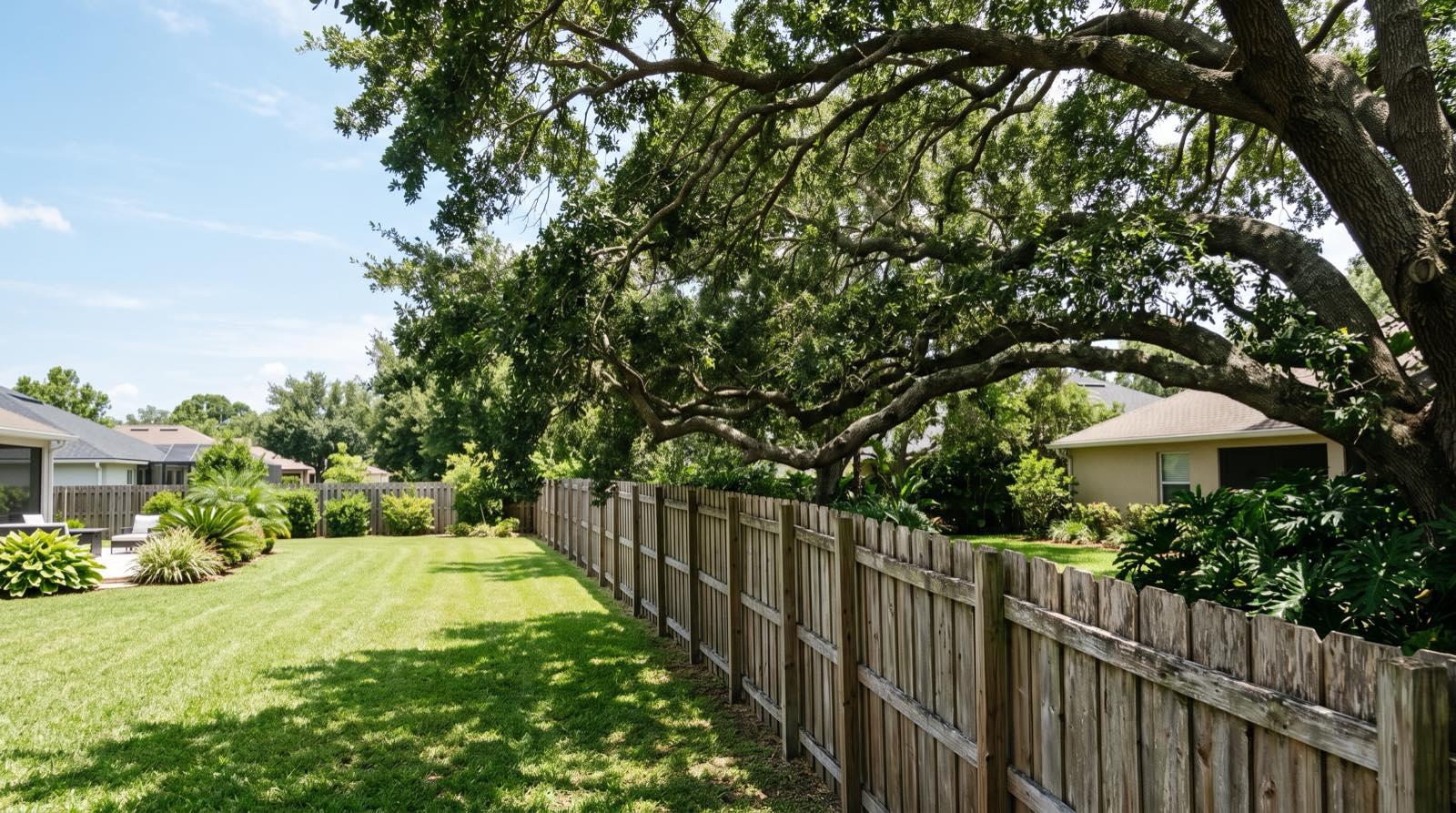
The oak grows next door, but a third of its canopy lives over your driveway, dropping limbs and shading your one patch of grass to death. Do you have to live with it? In Florida, no — but the rule that helps you is precise, and homeowners get in trouble at its edges more often than in its middle.
The self-help rule
Florida law treats overhanging branches and encroaching roots the same way: whatever crosses above or below your land is yours to deal with. You may trim branches and cut roots back to the property line — no permission needed, no notice required (though a friendly heads-up prevents most feuds). This is called the self-help remedy, and Florida courts have made it essentially your only remedy against a healthy tree: you generally can't sue a neighbor to make them prune it, and you can't make them pay your trimming bill. Their tree, your line, your scissors, your receipt.
The three hard limits
- Stop at the line. Your right ends exactly at the vertical plane of the boundary. Reaching across to make a cleaner cut, leaning a ladder on their trunk, or stepping into their yard to work is trespass — even one branch's worth.
- Don't hurt the tree. If your trimming or root-cutting seriously damages or kills the tree, you can be liable for its value — and mature shade trees appraise higher than most people expect. This is the big one with roots especially (more below).
- Your line, your bill. The cost is yours even though the tree isn't. Florida doesn't apportion trimming costs across the fence.
Roots: the same right, more risk
The rule covers roots lifting your driveway or invading your beds — you may sever them at the line. But roots are the tree's anchor, and cutting the wrong ones can destabilize the whole tree, which then becomes a falling hazard you helped create. Before cutting anything bigger than a garden hose within a few trunk-diameters of the tree, get an assessment — our guide to roots damaging foundations and driveways covers when cutting is safe, and when the real answer is a root barrier or a removal conversation with the neighbor.
Why a clean cut matters (beyond manners)
Hacking limbs flush at the fence line with a reciprocating saw leaves tearing wounds and stubs that decay — and decay in their tree traced to your cuts is exactly the "harm the tree" liability above. Proper line-trimming uses collar cuts at the right nodes so the tree seals, which sometimes means the technically-correct cut is a few inches on your side of the maximum you could claim. A crew doing trimming and pruning along a boundary keeps you inside the rule on both counts: position and tree health.
Want the overhang gone without the drama?
Crews handle property-line work constantly: clean cuts to the line from your side, debris hauled, tree unharmed, neighbor unaggravated. Free estimate.
Call (904) 371-6603What about the fruit, the leaves, the debris?
Quick lightning round of the questions that come with the big one. Leaves, acorns, and small debris blowing over the line are considered a natural condition — yours to rake, not actionable. Overhanging fruit technically belongs to the tree's owner while attached; in practice nobody litigates mangoes. And limbs that fall from a healthy tree in weather land under the ordinary fallen-tree rules — each side's own insurance, unless the tree was a known hazard.
When the tree next door is genuinely dangerous
Self-help trimming solves overhang. It doesn't solve a dying or structurally failing tree that could reach your house — you can't fix a rotten trunk from your side of the fence. There the playbook changes:
- Document it. Photos of the deadwood, the conks, the lean — the warning signs — with dates.
- Notify in writing. A short, civil letter or email creates the "knew or should have known" record that shifts liability onto the owner if the tree ever falls.
- Offer them the easy path. A certified arborist's hazard assessment means the owner can remove the tree with no city permit under HB 1159. Sometimes splitting a removal bill beats years of anxiety and one insurance catastrophe.
A neighbor who ignores written notice of a documented hazard owns everything that tree does next — which, oddly enough, is often the fact that finally gets it removed.