Callahan's tall pines and homestead oaks in western Nassau County need licensed, insured local crews for removal, trimming, stumps, land clearing, and 24/7 storm work. Removals run roughly $500–$6,000+, land clearing about $1,500–$5,000+ per acre, with free estimates. Residential hazard removals need no permit when an arborist documents it, under Florida HB 1159; crews work under local business licensing and insurance.
Callahan sits at the crossroads of US 1 and A1A in western Nassau County, a small town ringed by timber land, farms, and rural homesteads about half an hour northwest of Jacksonville. In-town lots hold mature shade oaks planted generations ago; outside town, properties stretch into acreage where the pine woods come right up to the yard. Both patterns generate real tree work — a water oak over a carport in town, a line of storm-brittle pines along a pasture fence out of it — and both are squarely inside the four-county area our crews cover. 904 Tree Service connects Callahan homeowners with licensed, insured crews who work western Nassau all season.
Callahan's trees
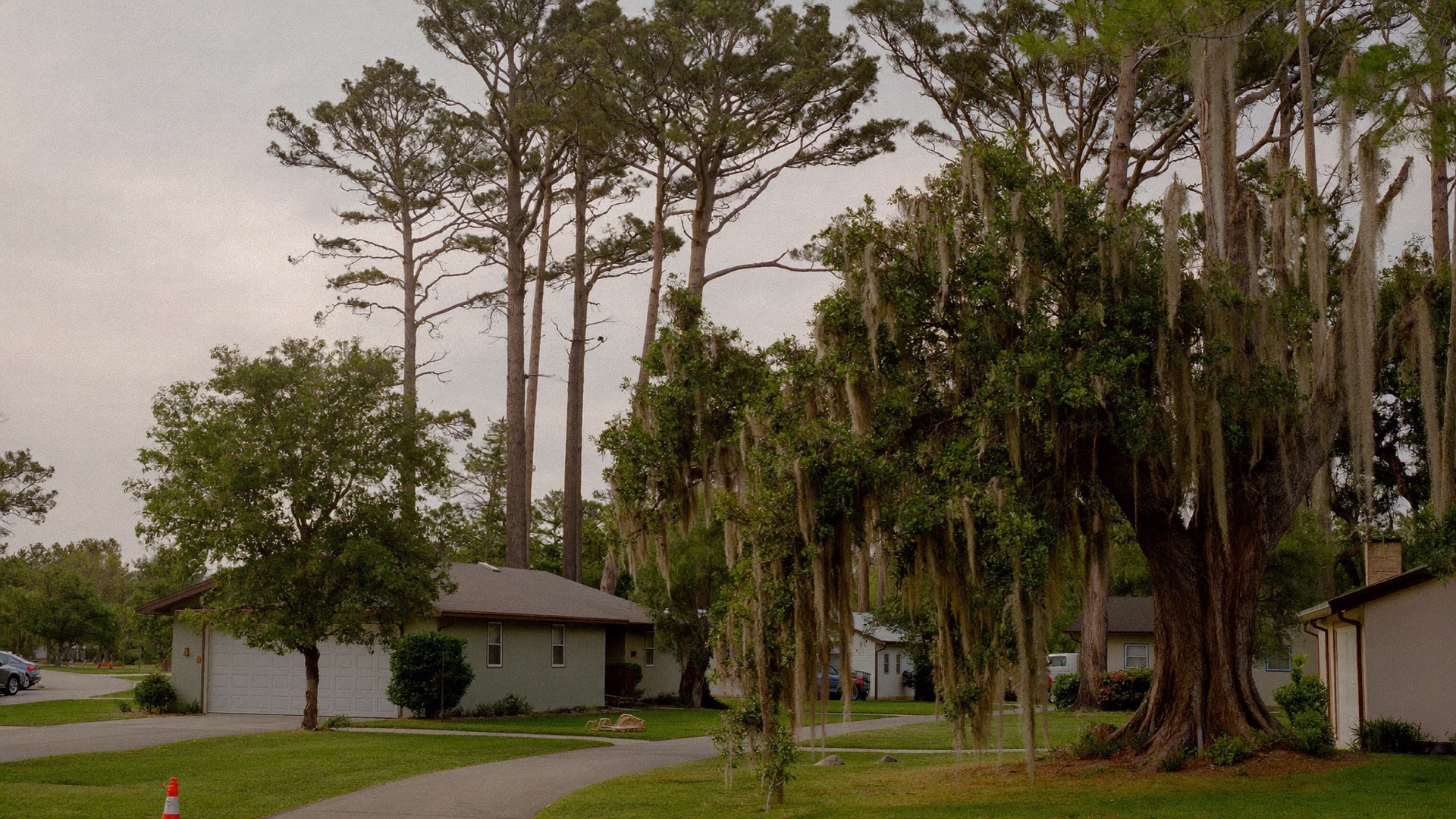
Western Nassau is classic North Florida pine flatwoods: tall slash and loblolly pines on the sandy flats, with longleaf on the drier ridges. Around the older homesteads and in-town streets stand broad live oaks and fast-growing water and laurel oaks — the generous shade trees that also, at 60 or 70 years old, start dropping limbs on whatever's beneath them. Sweetgum, red maple, and bay fill the wet edges near the creeks. The trees to watch are the same ones every rural property has: pines that died standing after drought or beetle damage, and the big old oak whose canopy has quietly grown over the roofline. Neither is a do-it-yourself job at this size.
Tree services we cover in Callahan
From in-town shade oaks to acreage at the edge of the flatwoods:
- Tree removal — tall pines and mature oaks, from open drops to rigged takedowns over structures.
- Land clearing — building sites, fence lines, and overgrown acreage in western Nassau.
- Tree trimming — deadwooding and clearance pruning for the big homestead oaks.
- Stump grinding — ground out below grade, quick work in sandy flatwoods soil.
- Emergency tree service — 24/7 dispatch for trees on structures and blocked drives.
- Storm damage cleanup — full-property haul-off with insurance documentation.
- Palm tree service — trimming and skinning for cabbage palms and ornamentals.
These ranges hold across the 904 — for the full breakdown of what moves the number, see our Jacksonville tree service cost guide.
Storm season in the flatwoods
From June through November, hurricane season is the flatwoods' annual audit. Tall pines catch wind above everything around them, and tropical rain saturates the sandy soil until root plates give — which is why so much of the storm damage in western Nassau is whole pines down rather than broken limbs. Callahan also sits far enough inland that people relax about hurricanes; the wind that reaches it is weaker than at the coast, but it's arriving over trees that are taller, older, and closer to structures than beach landscaping ever gets. After a named storm, crews work the county from the coast inland, and active hazards — a tree on a house, a blocked drive — jump the queue. The cheaper move is taking the standing dead pines down pre-season, on your schedule; when the wind wins one anyway, 24/7 dispatch answers around the clock.
Beetle-killed pine at the fence line?
A dead pine only gets more dangerous — and more expensive — the longer it stands. Get a licensed, insured crew out for a free look and a straight answer.
Call (904) 371-6603Permits & insurance
On residential property you generally don't need a permit to remove a hazardous tree when a certified arborist documents that it's a danger, under Florida HB 1159 — and trimming never needs one. Crews serving Callahan and Nassau County work under a local business tax receipt and insurance rather than any statewide tree license; wetland edges along the area's creeks and swamps can carry their own rules, which the crew confirms before cutting near the water. On insurance, homeowners coverage typically pays for removal when a storm-felled tree damages an insured structure — the house, a garage, a fence, or a vehicle — usually up to a policy limit, while a pine down in the open pasture generally isn't covered. Every storm job comes with dated photos and a written estimate to support a claim. For the full rundown, see do I need a permit to remove a tree in Jacksonville?