Oakleaf's preserved pines and young builder-planted oaks around newer homes need licensed, insured local crews for removal, trimming, stumps, and 24/7 storm work. Removals run roughly $500–$6,000+ and trimming starts around $500, with free estimates. Residential hazard removals need no government permit when an arborist documents it, under Florida HB 1159 — though Oakleaf HOAs often have their own tree rules worth checking.
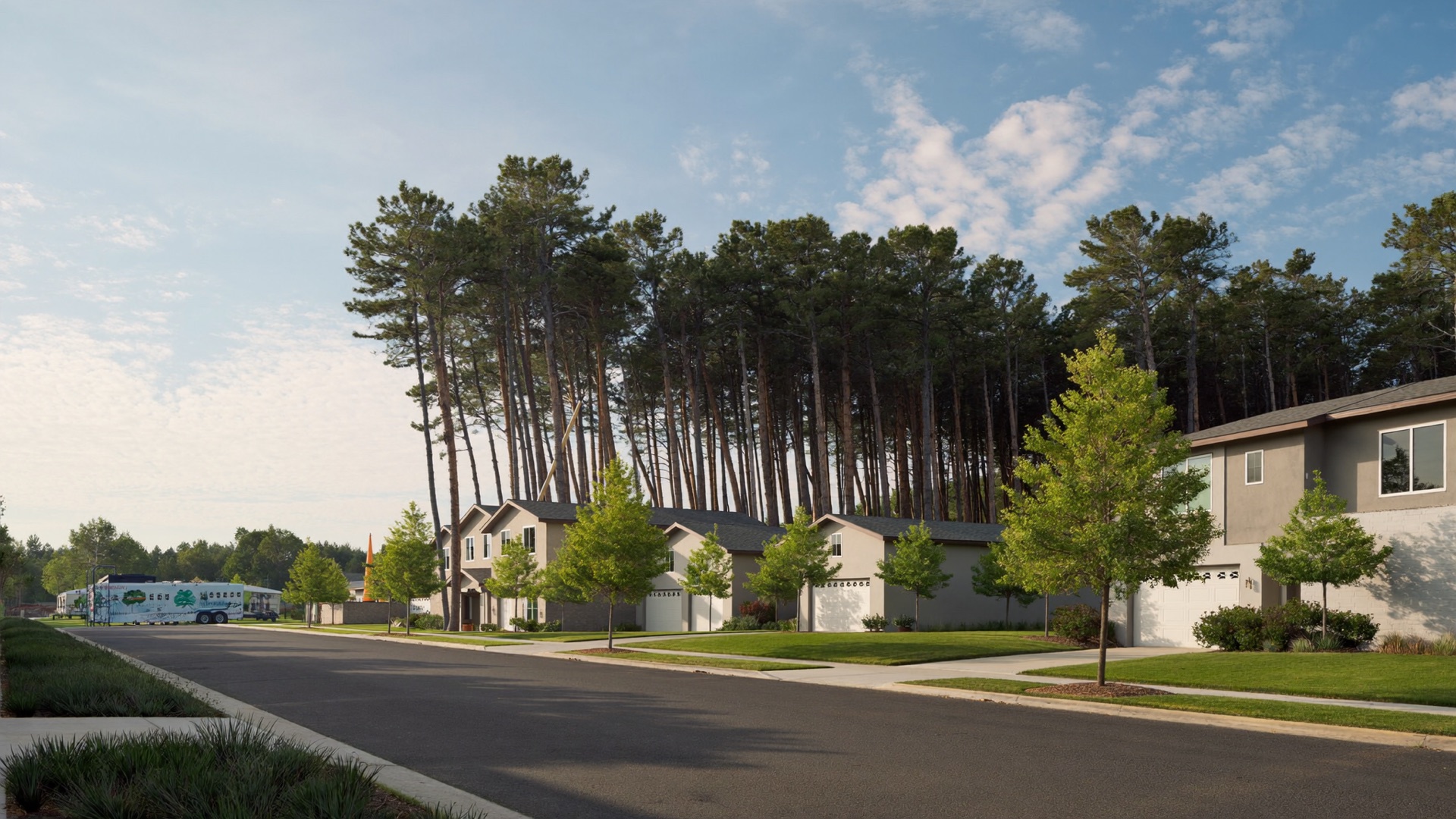
Oakleaf grew out of the pine woods on Jacksonville's southwest side — a master-planned stretch of newer neighborhoods in northern Clay County at the Duval line, next door to the Argyle area. Like Fleming Island a generation before it, the builders kept bands of the original timber: conservation buffers and preserved slash pines stand right behind fence lines of homes built in the last twenty years. Add the young oaks and ornamentals the builders planted out front, and you get Oakleaf's particular mix — trees that are either much older than the house or much younger, with very little in between. Both ends generate calls, and 904 Tree Service routes them to licensed, insured crews who work these neighborhoods week in, week out.
Oakleaf's trees
The trees that matter most in Oakleaf are the tall preserved pines along the conservation edges — original woods left standing when the neighborhoods went in. They're the area's character, and its main tree risk: a 70-foot slash pine that spent its life inside a forest now stands exposed on a buffer line, catching wind it never used to, with a two-story roof twenty feet away. Out front, the story is the opposite: builder-planted live oaks, elms, crape myrtles, and magnolias that are still teenagers. The smart money in a neighborhood this age goes to structural pruning while the trees are young — training strong form now for a fraction of what corrective work costs at maturity — and to keeping an honest eye on those big pines out back.
Tree services we cover in Oakleaf
Whatever this newer canopy needs, there's a crew for it:
- Tree removal — including tall preserved pines leaning over newer homes and pool cages.
- Tree trimming — structural pruning for young oaks, deadwooding and clearance for the pines.
- Stump grinding — ground out below grade so sod can go back down clean.
- Emergency tree service — 24/7 dispatch for trees on structures and blocked drives.
- Storm damage cleanup — full-property haul-off with insurance documentation.
- Palm tree service — trimming and skinning for cabbage palms and ornamentals.
- Land clearing — fence-line and lot clearing for pools, additions, and projects.
These ranges hold across the 904 — for the full breakdown of what moves the number, see our Jacksonville tree service cost guide.
Storm season on the buffer line
From June through November, hurricane season finds the weak point in every preserved-pine buffer. Forest-grown pines that lose their neighbors to development also lose their windbreak — so gusts that once spread across a whole stand now load a single exposed trunk, and the area's sandy, quickly saturated soil loosens the root plate under it. When one goes, it goes toward whatever cleared the space: usually a house. That's the typical Oakleaf emergency call, and it's why the honest pre-season move here is having the exposed pines within falling distance of the house looked at before the first named storm — thinning, deadwooding, or removing the ones that are already failing. When the wind gets one anyway, 24/7 dispatch answers around the clock.
Preserve pine leaning over the lanai?
Exposed buffer pines fail toward the clearing — which is usually your yard. Get a licensed, insured crew out for a free look before storm season decides.
Call (904) 371-6603Permits, HOAs & insurance
On residential property you generally don't need a government permit to remove a hazardous tree when a certified arborist documents that it's a danger, under Florida HB 1159 — and trimming never needs one. The Oakleaf-specific wrinkle is the HOA: most of the community's neighborhoods have covenants on removing or replacing trees, especially in front yards and along common areas, and HB 1159 doesn't erase private covenants the way it does city permits — so a quick check of your association's rules is worth it before scheduling. Crews work under a local business tax receipt and insurance. On the insurance side, homeowners coverage typically pays for removal when a storm-felled tree damages an insured structure — roof, screen enclosure, fence, or car — usually up to a policy limit, while a pine down in the open yard generally isn't covered. Every storm job comes with dated photos and a written estimate to support a claim. For the full rundown, see do I need a permit to remove a tree in Jacksonville?