Tree removal in Fruit Cove typically runs $500–$6,000+ — about $300–$700 for a small tree, $700–$2,000 for a medium one, and $3,000 and up for a large live oak or tall pine near the house that needs a crane — with stump grinding about $100–$400 per stump and free estimates. Licensed, insured local crews also handle trimming and 24/7 storm work. A documented residential hazard tree needs no permit under Florida HB 1159; Fruit Cove is unincorporated St. Johns County, so county rules — plus any HOA or conservation-easement limits — apply.
Fruit Cove is not part of Jacksonville. It's an unincorporated community in northwest St. Johns County — about 32,000 people at the 2020 census — on the east bank of the St. Johns River. Julington Creek marks the county line to the north, with Mandarin across the water. The name comes from the citrus groves that once covered this riverbank. State Road 13, designated the William Bartram Scenic & Historic Highway, runs south from the Julington Creek bridge through Fruit Cove and on to Switzerland, past Alpine Groves Park, a former citrus grove. Julington Creek Plantation sits just east along Race Track Road. For the broader corridor — RiverTown, World Golf Village, and the newer subdivisions — see our St. Johns County page; this page is about Fruit Cove itself.
Fruit Cove's trees
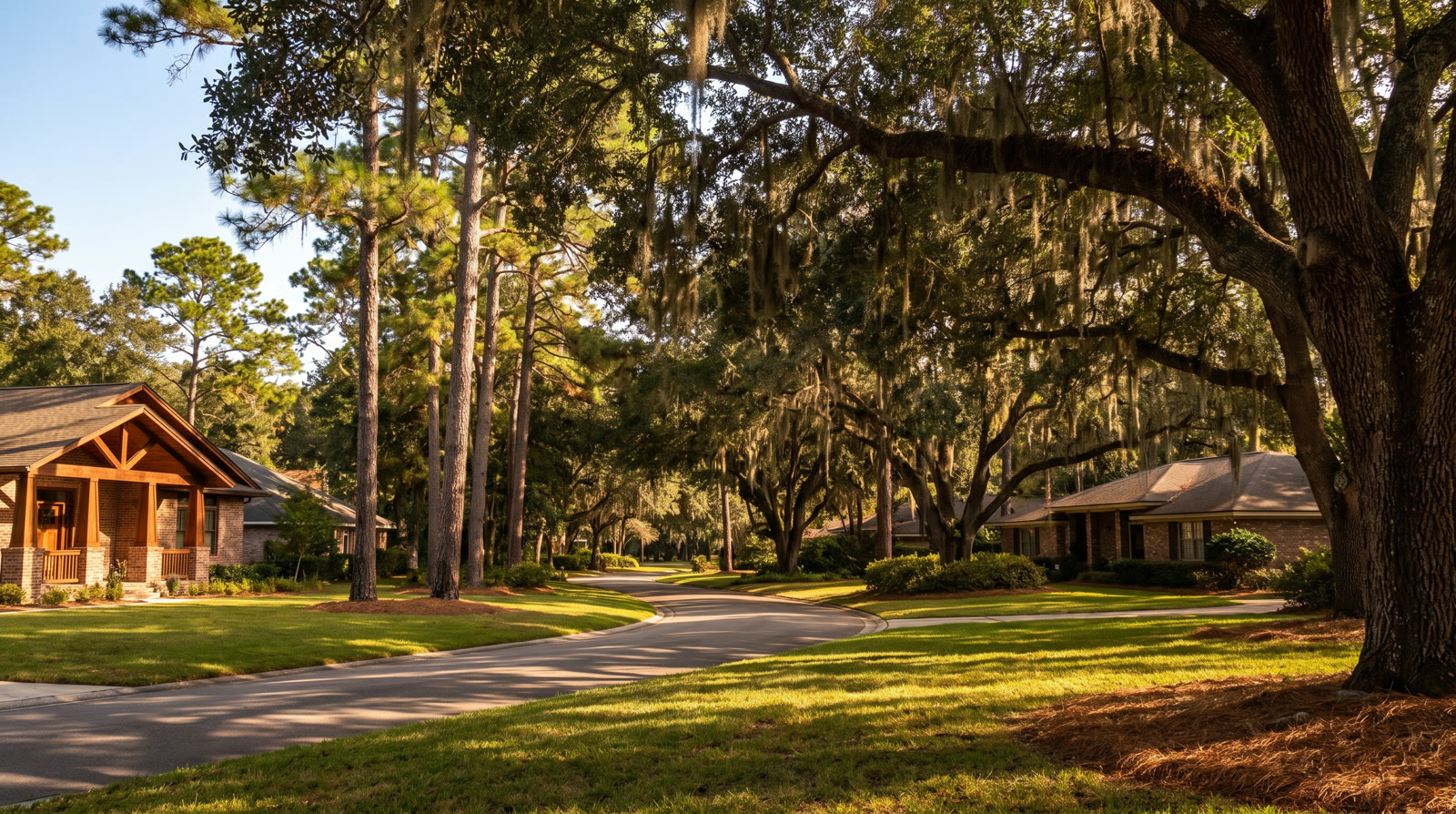
Fruit Cove's neighborhoods were built into riverfront hammock and old grove land, and a lot of that canopy was kept. Southern live oaks shade SR 13 and the older river lots, draped in Spanish moss. Laurel oaks and water oaks fill many yards — fast-growing, but shorter-lived, and prone to internal decay as they age. Tall slash and loblolly pines stand between houses and along back property lines, with sabal palms, southern magnolias, and, in the wet ground along the river and creeks, cypress and red maple. The soil is sandy and drains fast, which is good for grinding stumps and bad for anchorage: a tall, shallow-rooted pine that never had to stand alone can lean or topple once the lots around it are cleared.
Tree removal in Fruit Cove
The removals Fruit Cove homeowners call about most fall into a few familiar patterns:
- An aging laurel oak over the roof — dropping limbs, fungus at the base, or a hollow found during a trim.
- A tall pine leaning toward the house after a storm soaked the ground, or a dead pine standing at the back fence line.
- Riverfront and creek lots where the only access is from the street side, so a big tree comes down in rigged sections or by crane.
- Trees crowding a pool, driveway, or addition — roots lifting pavers, limbs over the screen enclosure.
What sets the price is size, access, and how close the tree is to something that matters. An open-yard drop sits at the low end; a large oak between a two-story home and a pool enclosure, needing a crane, sits at the top. Estimates are on site and free, and adding stump grinding to the same visit is almost always cheaper than a separate trip. More detail on the tree removal page.
These ranges hold across the 904 — for the full breakdown of what moves the number, see our tree service cost guide.
Other tree services in Fruit Cove
- Tree trimming — deadwooding, canopy thinning, and roof and driveway clearance, from around $500.
- Stump grinding — ground below grade; the sandy soil makes it fast.
- Emergency tree service — 24/7 dispatch for trees on structures and blocked drives.
- Storm damage cleanup — full-property haul-off with insurance documentation.
- Palm tree service — trimming and skinning for sabal and ornamental palms.
- Certified arborist — keep-or-remove assessments and hazard letters for HB 1159.
Big oak or pine worrying you?
Get a licensed, insured crew out to Fruit Cove for a free look — sometimes a trim solves it, sometimes it should come down before the next storm does it for you.
Call (904) 371-6603Storm season along the river
From June through November, Fruit Cove's exposure comes off the St. Johns. The river is wide along this stretch, and wind builds across the open water before it reaches the riverfront canopy. Long tropical soaks saturate the sandy soil, and the river itself can rise: during Hurricane Irma in 2017, the St. Johns hit record flood stages in Jacksonville and flooded homes along its banks. That combination is when tall pines snap and top-heavy oaks tip. Pre-season trimming — deadwooding and thinning before the first named storm — is the cheapest protection; when something comes down anyway, 24/7 emergency tree service gets a crew out fast. See the hurricane tree prep guide.
Permits & insurance
Under Florida HB 1159 — now Section 163.045, Florida Statutes — a residential tree can be removed with no local permit when a certified arborist documents in writing that it poses an unacceptable risk, and trimming never needs a permit. Fruit Cove has no city government, so St. Johns County's rules apply, not the City of Jacksonville's. The local wrinkles are private and environmental: HOA covenants, conservation easements behind some lots, and wetland buffers along the river and creeks can all restrict removals, so the crew checks before anything comes down. More in our tree permit guide.
On insurance, homeowners coverage typically pays for removal when a storm-felled tree damages an insured structure, usually up to a policy limit — not the healthy tree you'd simply rather not have. Every storm job comes with dated photos and a written estimate. See does homeowners insurance cover tree removal in Florida?