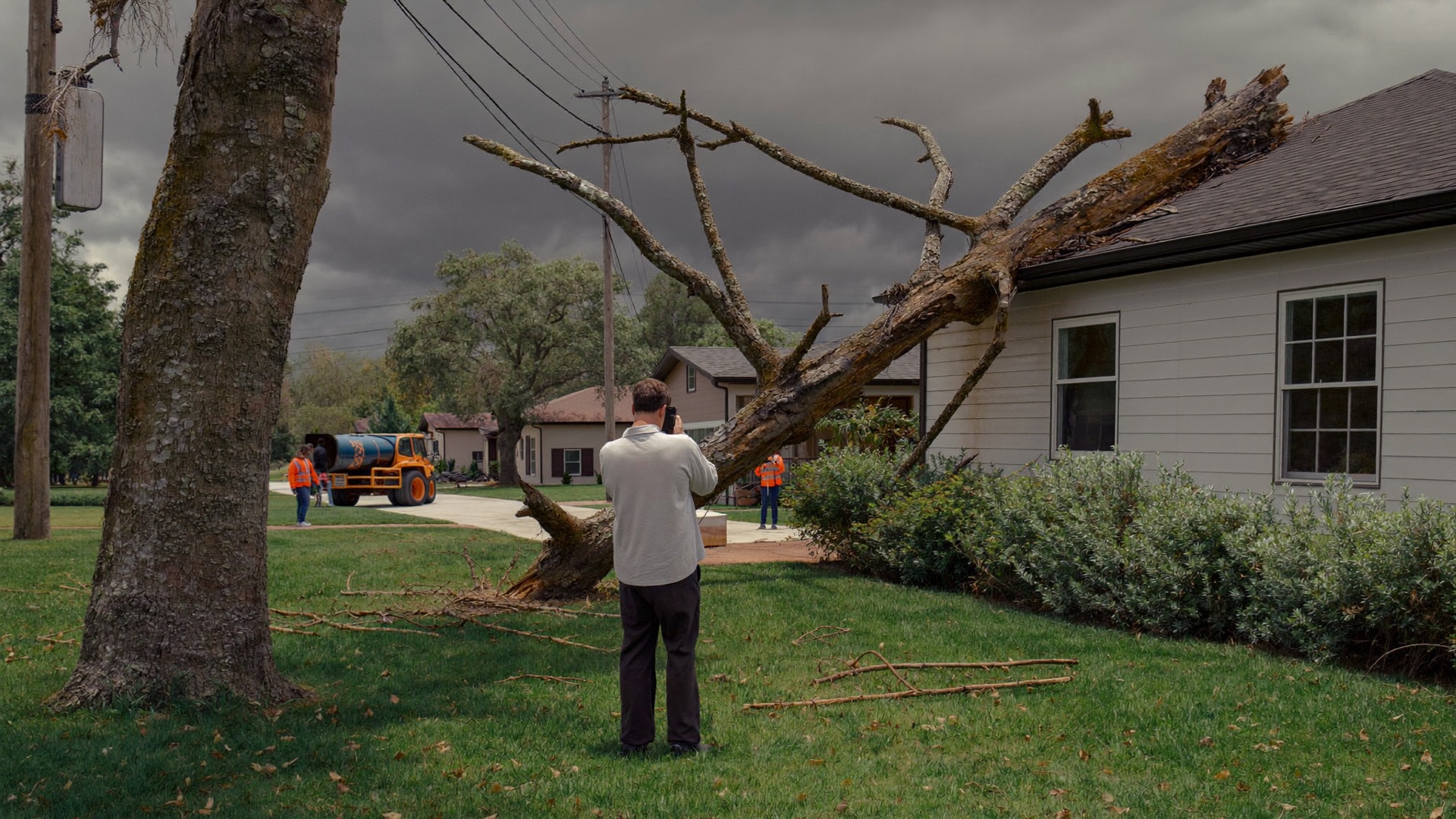
Florida homeowners insurance generally covers tree removal when a covered peril — usually storm wind — puts the tree onto an insured structure: the house, garage, fence, shed, or screen enclosure. It pays to get the tree off and repair the damage, up to policy limits. What it generally does not cover: a tree down in the open yard, preventative removal of a standing tree, or flood-toppled trees. Dated photos and a written estimate are what make the claim.
Every storm season, half the calls to our line start with the same question — not "how fast can you get here?" but "will my insurance pay for this?" The honest answer is: it depends on what the tree hit, why it fell, and what you can prove. Those three things decide almost every tree claim in Florida, so let's take them in order.
When removal IS usually covered
Homeowners policies are built around covered perils damaging insured property. For trees, the classic covered scenario is wind: a storm fells a tree — yours or a neighbor's — onto something your policy insures. In that case the policy typically pays for both the removal of the tree from the structure and the repair of the damage, less your deductible and up to your limits. Scenarios that usually qualify:
- Tree or limb on the house or roof — the textbook claim. Removal off the structure, tarping, and roof repair all flow through the policy.
- Tree on the garage, shed, or other insured outbuilding — "other structures" coverage, typically a percentage of your dwelling limit.
- Tree on the fence, screen enclosure, or pool cage — also other-structures territory, and one of the most common Jacksonville claims after any windstorm.
- Tree blocking the driveway — many policies pay removal when a fallen tree blocks vehicle access to the home, even without structural damage. This one varies by policy, so check.
- Lightning-struck or fire-damaged trees that damage property — fire and lightning are covered perils on essentially every policy.
When removal is usually NOT covered
Where homeowners get surprised is everything that doesn't involve a damaged structure:
- The tree fell in the yard and hit nothing. Most policies treat this as debris, subject to a small cap — commonly in the range of $500–$1,000 total — or no coverage at all. A big oak filling the backyard can cost well more than that cap to haul off.
- Preventative removal. A dead, leaning, or worrying tree that's still standing is a maintenance issue, not a claim. Insurers expect owners to deal with hazards; that's precisely why the smart money removes the dying pine in April at planned rates — typically $500–$6,000+ — rather than paying emergency rates plus a deductible in September.
- Neglect. If the adjuster finds the fallen tree was long dead and you knew it, the claim itself can be challenged — the flip side of the neighbor-liability rule.
- Flood and storm surge. A tree toppled by floodwater or washed-out soil is a flood policy matter. Standard homeowners insurance excludes flood.
- The tree itself. Don't expect payment for the lost tree or landscaping — Florida policies add only small per-tree allowances for limited perils, and wind is often excluded from them.
- Your car. A tree on a vehicle runs through your auto policy's comprehensive coverage, never homeowners — regardless of whose tree it was.
Full local pricing context is on the Jacksonville tree service cost page.
The Florida wrinkle: hurricane deductibles
Florida policies carry a separate hurricane deductible — typically a percentage of your dwelling coverage (often 2–5%) rather than a flat dollar amount — that applies when the damage comes from a named hurricane. On a $400,000 dwelling limit, a 2% hurricane deductible means the first $8,000 of hurricane damage is yours. That math matters for tree claims: a limb that cracks some shingles may fall entirely inside the deductible, while a trunk through the roofline clearly exceeds it. It's one more reason pre-season tree prep is the cheapest insurance decision you can make — the claim you never file has no deductible.
How to document a claim that sticks
Adjusters approve what they can verify. When a tree comes down on your property, the order of operations is:
- Safety first. Everyone away from the tree; if a power line is involved, call JEA (or your utility) and 911 before anything else.
- Photograph before anything moves. Dated, wide shots showing the tree on the structure, plus close-ups of every point of damage. Shoot from multiple angles, from a safe distance.
- Get a written, itemized estimate. Your carrier wants a professional scope for the removal — not a verbal number. Crews dispatched through our 24/7 emergency line photograph the scene and provide the written estimate as a standard part of the job.
- Mitigate further damage. Policies require reasonable steps to prevent things from getting worse — getting the weight off the roof and tarping the hole is mitigation, and it's claimable. Keep every receipt.
- File promptly and keep copies. Report the claim quickly — Florida law sets deadlines for hurricane claims — and keep your own copies of photos, estimates, and invoices.
Tree on the house right now?
Get a licensed, insured Jacksonville crew dispatched 24/7 — they'll make it safe, and the photos and written estimate you need for your claim are part of the job.
Call (904) 371-6603Whose tree was it? (Why it matters less than you think)
If the fallen tree was rooted next door, Florida's rule still points most claims at your own policy: a healthy tree felled by a storm is an act of God, and each owner claims their own damage. Liability shifts to the neighbor only when the tree was known to be dead or dangerous and they ignored it. The full breakdown — including the written-notice move that protects you before a worrying tree falls — is in our guide: a neighbor's tree fell on my property — who pays?
One thing insurance doesn't change: the permit answer
Coverage and permits are separate questions. Under Florida HB 1159 (§ 163.045, F.S.), a hazardous tree at a single-family home can be removed without a city permit when a certified arborist documents the danger in writing — whether or not insurance is paying. On storm calls the crew arranges that documentation as part of the job. Details: do I need a permit to remove a tree in Jacksonville?