Tree trimming in St. Augustine typically starts around $500 (roughly $150 an hour), and palm trimming runs about $75–$400+ per palm. Late winter to early spring is ideal, with storm-prep pruning done before hurricane season in June. Routine pruning needs no permit — but inside city limits, over-cutting can count as destroying a tree. Estimates are free.
In St. Augustine, most trees worth trimming are trees worth keeping. The live oaks arching over the historic district, Lincolnville, and the older mainland streets are the city's signature, and many are protected — so pruning is how you live with a big oak for decades instead of fighting it. 904 Tree Service routes your job to a licensed, insured local crew that prunes to ISA and ANSI A300 standards, not to whatever's fastest with a chainsaw.
Size, height, access, and how close the canopy sits to a roof or power line move the number. Full ranges for every service are in the tree service cost guide.
Canopy reduction in St. Augustine
Canopy reduction shrinks a crown's height or spread by cutting leaders and limbs back to healthy side branches that can take over — not by shearing across the top. It's the right call for an oak that has outgrown a small old-town lot, or one whose limbs sit heavy over a roof, a porch, or a neighbor's house. It also lowers the tree's wind "sail" before hurricane season. The rule that protects the tree: remove no more than about 25 percent of the canopy in a season, and keep its natural form. Reduction done badly is just topping with better marketing — which is why it belongs with a crew that knows the difference.
Deadwooding St. Augustine's live oaks
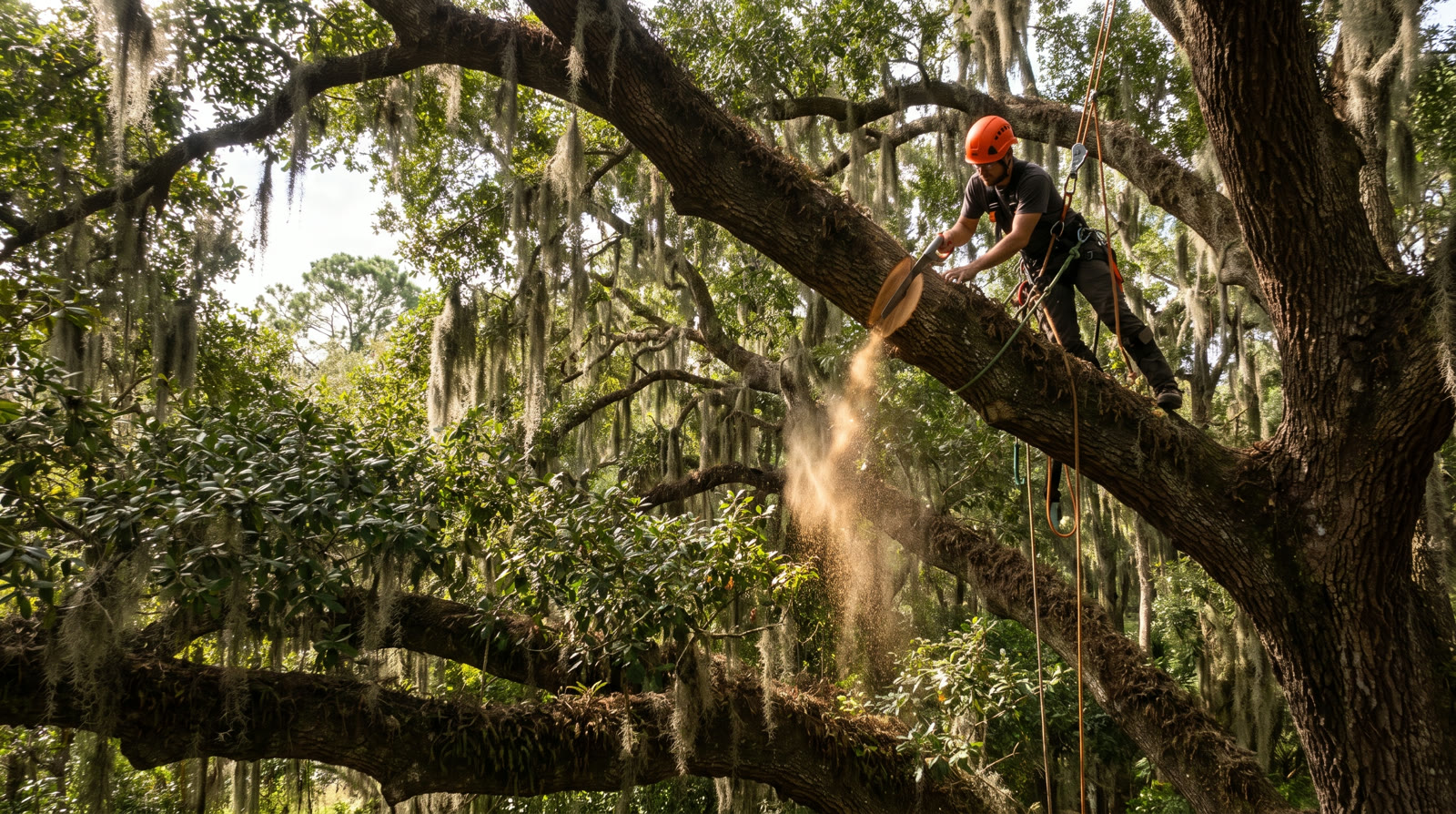
Deadwooding removes the dead, dying, and broken limbs throughout the canopy — the ones that fall on their own in the next squall, aimed at whatever sits beneath them. On a mature live oak draped in Spanish moss, dead wood can be hard to spot from the ground; a climber in the canopy sees it, along with cracks, cavities, and weak unions you'd never notice from the yard. It's the fastest safety upgrade a big oak can get, and a standard part of any pre-storm visit.
Palm tree trimming in St. Augustine
The sabal (cabbage) palm — Florida's state tree — is everywhere here, from courtyard gardens downtown to the salt-blown yards of Anastasia Island, along with queen, Washingtonia, and ornamental palms around newer homes. Palms are pruned nothing like oaks. A proper trim takes only the brown, hanging fronds, seed stalks, and loose boots, and stops at roughly the horizontal "9-and-3" line. The over-cut "hurricane cut" — stripping a palm to a few upright fronds — starves and stresses it rather than protecting it. Most palms need trimming about once a year. For skinning, disease checks, and removal, see palm tree service.
Pruning for salt wind and storm season
Coastal trees need a lighter hand. On the island and near the water, salt spray burns the ocean-facing side of the canopy, and oaks grow wind-shaped and one-sided — that's normal, and over-thinning a salt-stressed oak does more harm than good. Inland, the goal is classic storm prep: thin the sail so wind passes through, drop the deadwood, and lift limbs off the roof and service lines. St. Augustine's sandy soil gives roots a shallow grip once it's saturated, so a lighter, better-balanced canopy matters here. Hurricane season runs June through November, and nor'easters keep the wind coming into winter — which is why late winter to early spring is the sweet spot for most pruning. For the full checklist, read the hurricane tree prep guide.
Want the canopy handled before June?
Pre-season pruning is the cheapest storm insurance there is. Call for a free estimate and get on a licensed, insured St. Augustine crew's schedule early.
Call (904) 371-6603Pruning inside city limits
Routine trimming generally needs no permit. The catch in the City of St. Augustine: its tree ordinance makes it unlawful to cut down, remove, or "effectively destroy by damaging" any tree 3 inches or larger in diameter without a permit. Topping, hat-racking, or stripping a protected oak to bare stubs can cross that line — and it permanently weakens the tree anyway. Proper pruning to industry standards stays well clear. Outside city limits, including Vilano Beach and unincorporated St. Johns County, county rules apply — see tree permit rules for the full picture.
When trimming isn't enough
If a tree is dead, split, rotting at the base, or leaning harder after every storm, no amount of pruning will fix it — that's a conversation about tree removal in St. Augustine, and often a stump to deal with afterward (see stump grinding in St. Augustine). If a limb is already down on the house, skip the estimate and call for 24/7 emergency tree service. For how trimming works across the 904, see our main tree trimming service page, or return to the St. Augustine tree service overview.